
Wherever soil is disturbed, exposed or at risk
Engineered wood strand mulch is used on any soil disturbance to reduce sedimentation and topsoil loss while stabilising slopes — protecting downstream water resources as a direct result.
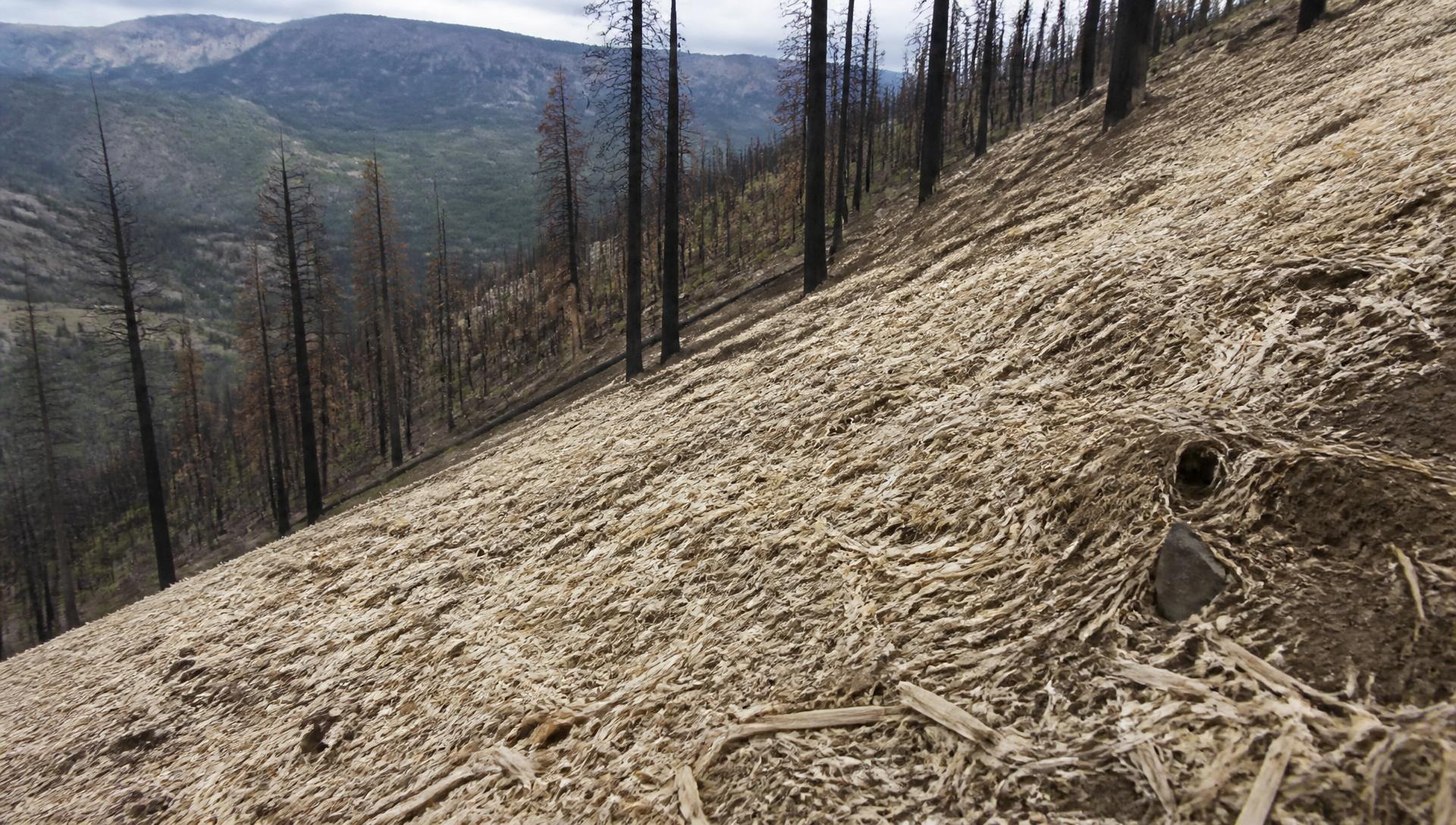
Burn-scar rehabilitation
Hydrophobic soils after a fire shed water fast, and the first intense storm does most of the damage. A strand cover breaks raindrop impact, slows sheet flow and keeps ash and sediment out of drainages while native seed establishes.
- Helicopter application for roadless and steep terrain
- Works on frozen ground ahead of spring runoff
- Protects streams, reservoirs and downstream infrastructure
Roadside re-vegetation
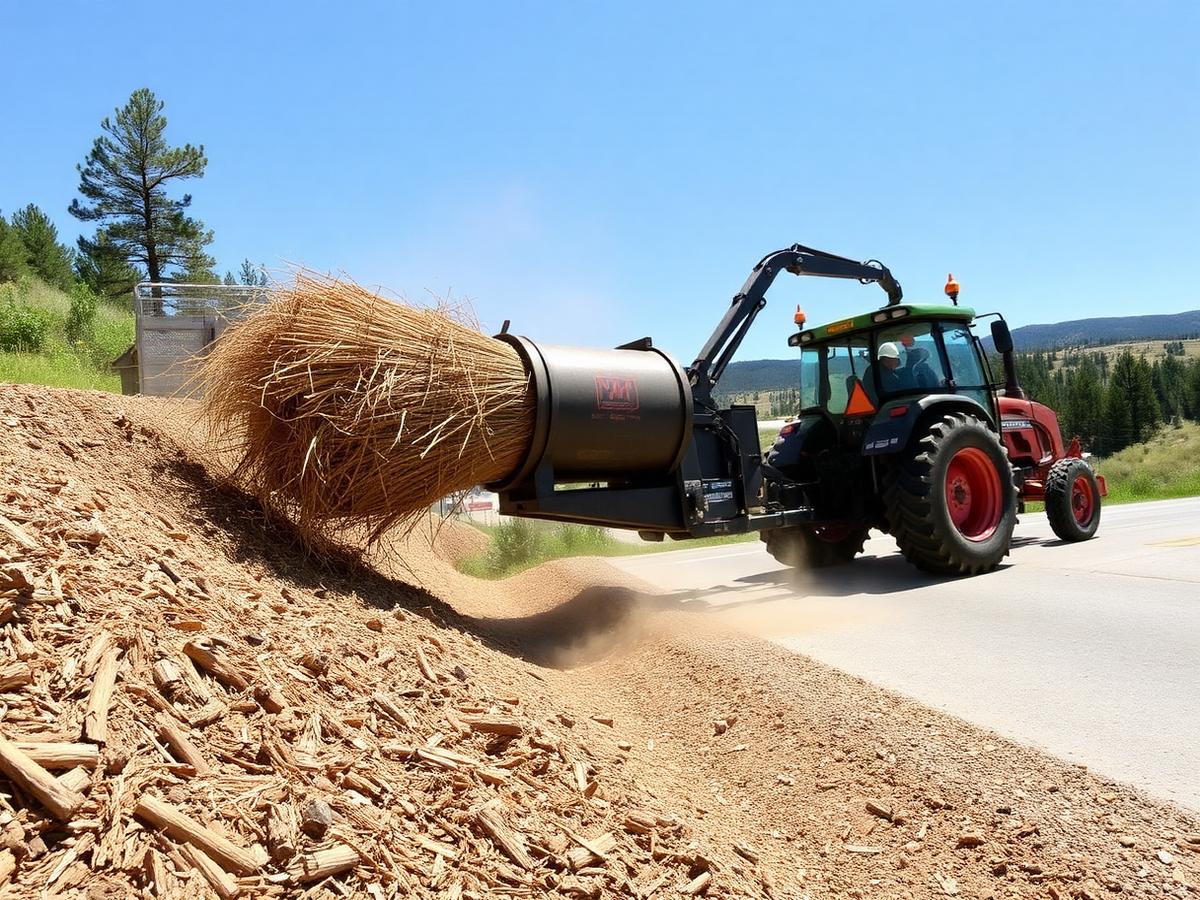
Cut and fill slopes along highways and county roads face wind loading, plough spray and freeze-thaw cycles. Strand mulch stays put through all three and replaces rolled erosion blankets without leaving netting in the right-of-way.
- Applied efficiently with straw blowers and bale processors
- Trafficable during ongoing construction
- Cuts PM10 dust along unsealed and graded surfaces
Energy, mining and pipeline sites
Well pads, topsoil stockpiles, access roads and pipeline corridors need stormwater and dust control that survives between site visits. The same cover protects stockpiled topsoil so it is still viable when reclamation begins.
- Temporary protection for topsoil stockpiles
- Stormwater compliance on active disturbances
- Final reclamation cover at pad closure
Riparian, wetland and flood-plain restoration
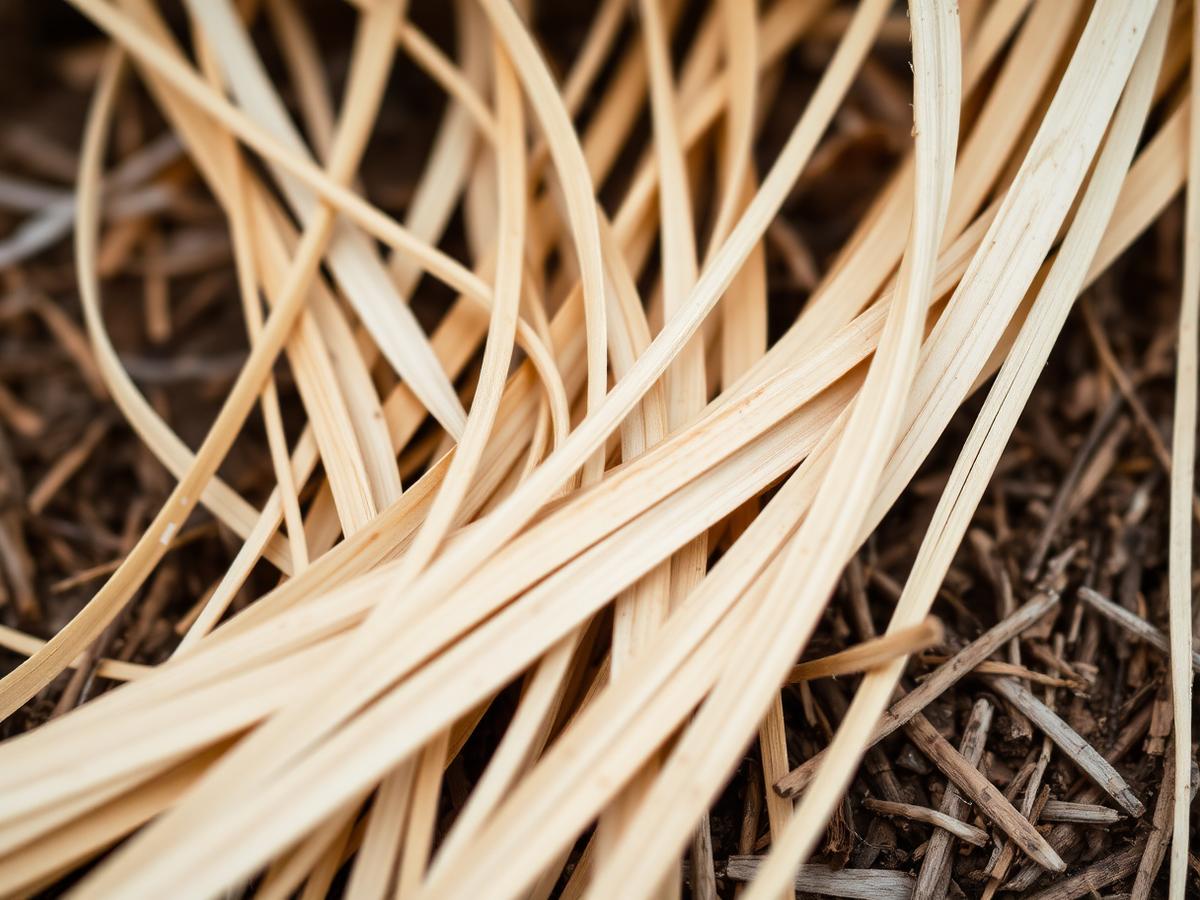
Along streams and flood plains, filtration matters as much as cover. Strand check structures filter sediment from flow without introducing seed or chemistry into the water, and they will not entangle wildlife the way netted products can.
- Replaces straw check dams with better filtration
- Safe alongside sensitive aquatic habitat
- Supports flood-plain and wetland re-vegetation
What the material does on site
- Resistant to high winds — 50+ mph sustained, 80+ mph gusts
- Effective on slopes up to roughly 70 %
- Applied by hand, straw blower or helicopter
- No seeds, no chemicals, no chemical runoff, no dust
- No crimping, stapling or tackifier required
- Long-lasting protection — 7+ years
- Retains moisture and increases infiltration
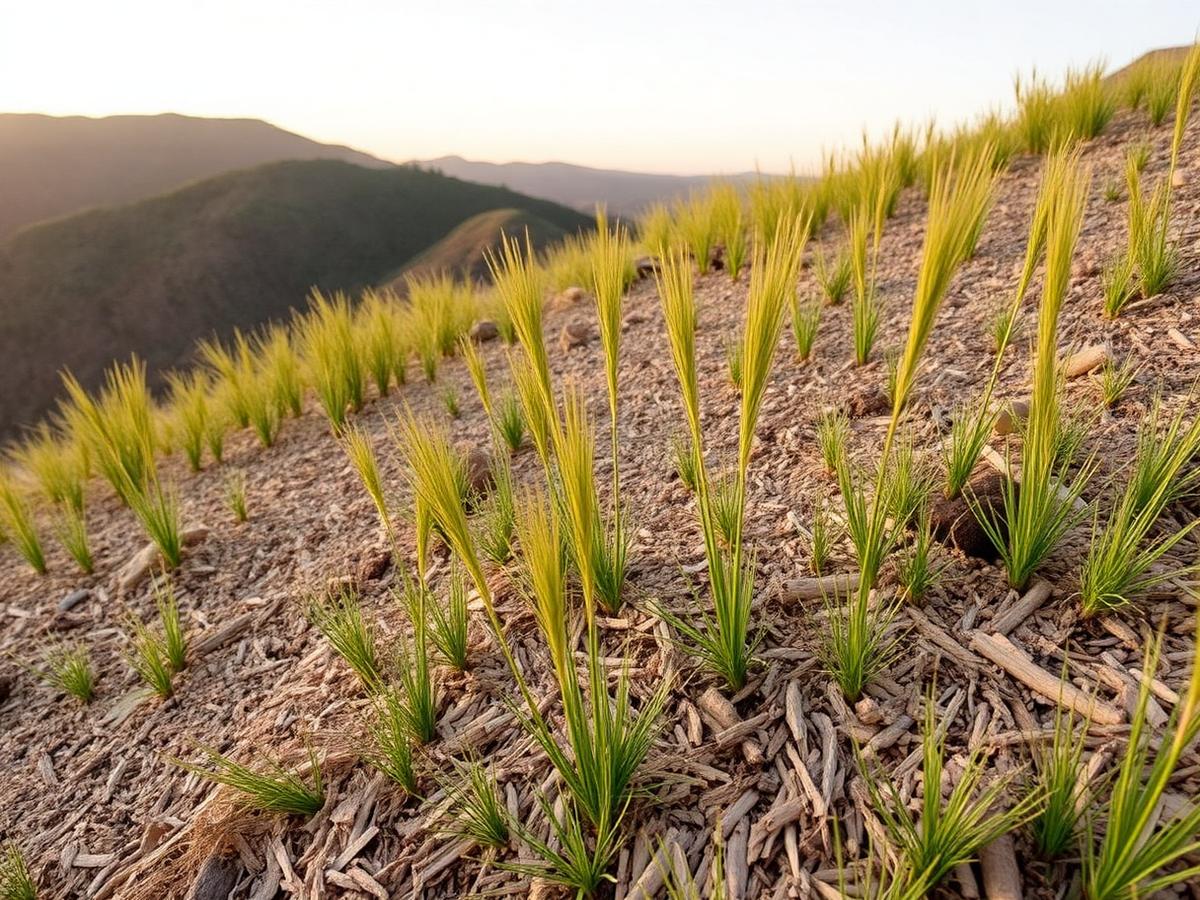
- Provides shade and structure for seeds and seedlings
- Stabilises soil temperature
- Reduces seed predation and grazing damage to young plants
- Prevents rilling, slows sheet flow, reduces raindrop impact
- Reduces soil compaction
- Not palatable to animals and does not trap wildlife
- Can be walked and driven on
- Reduces airborne particulates (PM10)
- Requires no supplemental water
- Can be applied over snow and on frozen ground
- Can be applied in windy conditions, widening the work window
- Seed above or below — broadcast, hydro or drill
- Immobilises nitrogen, helping suppress invasive species
- Adds organic material and improves soil productivity
- Allows air and light to reach the soil surface
- Less machine time to apply, so lower emissions
Common questions
How does it compare with agricultural straw?
Agricultural straw is light, short and frequently carries weed seed. Wood strands are heavier and longer, interlock on the ground, resist wind far better and contain no seed or chemical additives — which is why they are often specified as check-dam and blanket replacements.
Do I need netting, staples or tackifier?
No. The cover holds itself together through strand length and weight, so there is nothing to pin down, nothing to spray and nothing to retrieve afterwards.
Can it be applied outside the growing season?
Yes. It can go down over snow, on frozen ground and in freezing temperatures, and it tolerates wind that shuts down hydromulch operations.
How long does the cover last?
Field experience and monitoring show useful protection well beyond seven years, with the material decomposing slowly into soil organic matter.
What cover rate should I use?
Rate depends on slope, soil texture, rainfall and the level of protection required. Send us the site details and we will recommend a rate and the corresponding quantity.
Not sure which rate your site needs?
Send slope, acreage and soil type — we will size it for you.